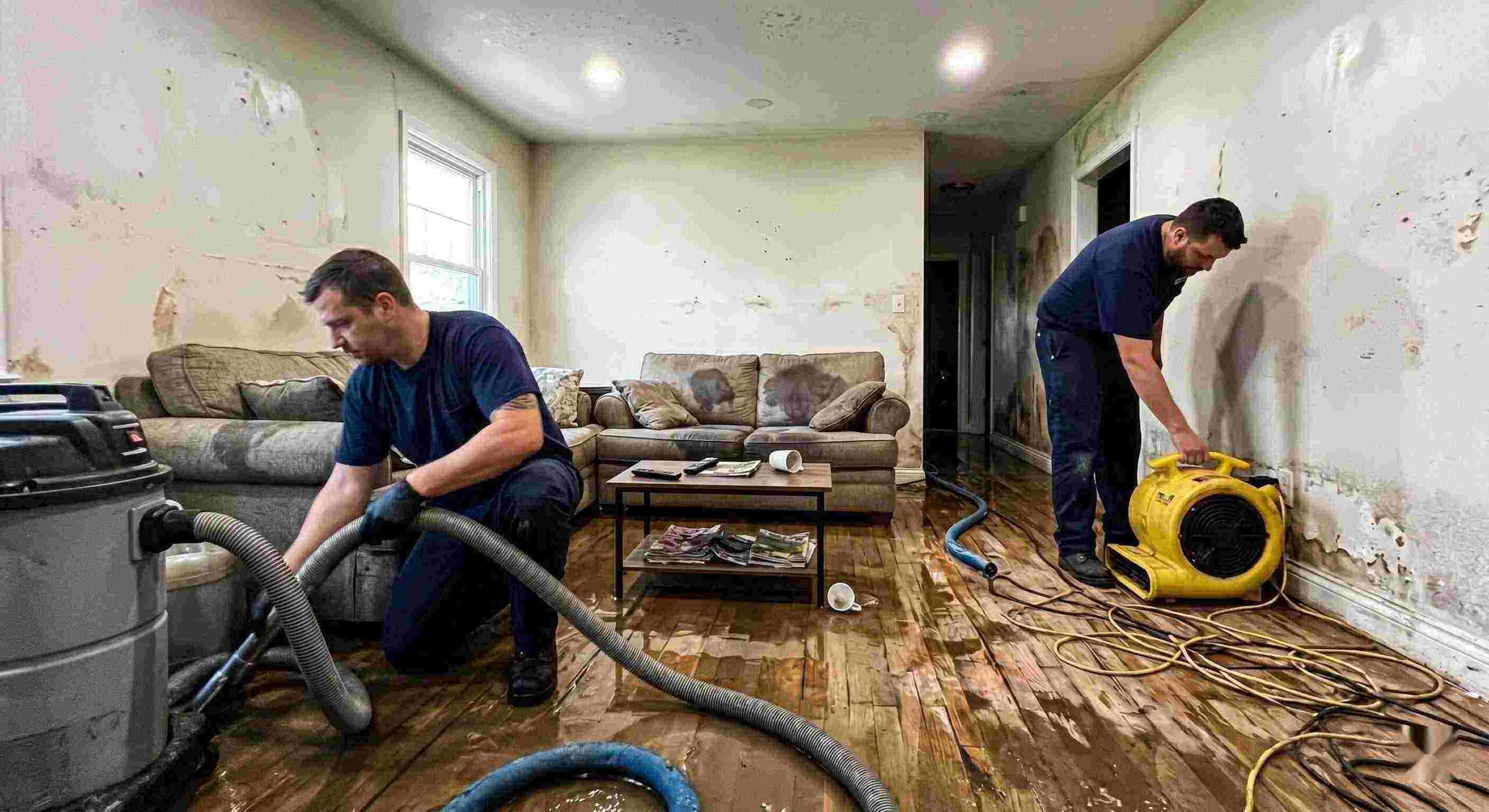
Every summer, somewhere around late June, the sky over Gilbert turns that weird greenish-brown color and the wind picks up out of nowhere. If you’ve lived in the East Valley for more than a year, you know exactly what I’m talking about. Monsoon season.
And every year, the same thing happens. Homeowners scramble after the first big storm instead of spending a weekend getting ahead of it. I get it. When it’s 115 degrees outside, the last thing you want to do is climb around your roof checking for problems. But the damage from one bad monsoon cell can run anywhere from a few hundred bucks to tens of thousands, depending on where the water gets in and how long it sits.
So here’s what’s actually worth doing before the storms roll through.
Your Roof Is the Whole Game
Most water damage during monsoon season starts at the roof. Not the walls. Not the windows. The roof. Specifically, the spots where different materials meet. Around your swamp cooler if you still have one. Where the tile meets the parapet wall. Anywhere there’s flashing or sealant that’s been baking in Arizona sun for a few years.
Walk your property and look up. You’re checking for cracked or missing tiles, sealant that’s pulled away from the wall, and any spots where you can see daylight or exposed underlayment. If your roof is flat, which a lot of older Mesa and Tempe homes have, look for ponding areas where water pools instead of draining. Those are ticking time bombs once the heavy rain hits.
One thing people forget about: the rubber boot seals around plumbing vents. Those things dry rot fast out here. A roofer can replace them in ten minutes. Ignoring them means water runs down the pipe and into your ceiling, and you won’t notice until you see the stain spreading.
Clean Your Gutters (Yes, Even in the Desert)
People move to Arizona from the Midwest and assume gutters aren’t really a thing here. And honestly, a lot of homes in the East Valley don’t even have them. But if yours does, clean them out. Desert landscaping drops more debris than you’d think. Palo verde pods, mesquite leaves, random dust buildup that turns into a cement-like clog when it gets wet.
If you don’t have gutters and you’re noticing water pooling against your foundation after storms, that’s something to pay attention to. The soil out here expands and contracts with moisture. Over time, that pooling can cause foundation movement, which leads to slab cracks, which leads to a whole different category of problems.
Check the Grade Around Your Foundation
This one is boring but it matters. The dirt around your house should slope away from the foundation, not toward it. Over time, settling and landscaping changes can reverse that grade. Especially if you’ve had pavers or decorative rock installed and the contractor didn’t think much about drainage.
Take a garden hose, run some water along the foundation, and watch where it goes. If it flows toward the house and pools against the slab, you’ve got a grading issue. It’s a relatively cheap fix now. It’s an expensive fix after water has been sitting against your slab for three monsoon seasons.
Know Where Your Water Shutoff Is
This sounds basic. It is basic. But I can’t tell you how many homeowners I’ve talked to who couldn’t find their main water shutoff when they needed it. During monsoon season, the risk isn’t just rain coming in from outside. Power surges from lightning can knock out sump pumps. Pressure changes can stress old supply lines. If a pipe bursts at 2 AM during a storm, you need to kill the water supply in under a minute, not spend twenty minutes with a flashlight looking for a valve you’ve never touched.
Find it now. Make sure it turns. If it’s seized up, get a plumber out to replace it. This is one of those things that costs almost nothing to fix proactively and costs a fortune when it fails at the worst possible time.
Appliances in the Garage Are Sitting Ducks
The East Valley layout is pretty standard. Attached two-car garage, water heater in the garage, sometimes the washer and dryer too. During a monsoon, garage doors can leak at the bottom seal if the seal is cracked or the door isn’t sitting flush. Water blows in under the door. It hits the water heater. It hits the washer hoses.
And here’s the part people don’t think about. If that water sits for even 24 to 48 hours in a hot, enclosed garage, you’ve got mold conditions. Arizona’s dry climate doesn’t protect you once water gets into an enclosed space. The humidity inside that space spikes regardless of what’s happening outside.
Check your garage door seal. Look at the hoses running to your washing machine. If those hoses are the original rubber ones that came with the house, replace them with braided stainless steel. They’re like fifteen bucks each at Home Depot and they don’t burst.
Have a Plan, Not Just Hope
Here’s where most people drop the ball. They do the prep work, which is great. But they don’t think about what happens if water gets in anyway. Because sometimes it does. A freak microburst can dump rain sideways in ways your roof was never designed to handle.
Know who you’d call. Not Google-it-at-midnight kind of know. Actually have a restoration company’s number saved in your phone. IICRC-certified, licensed, bonded and insured. Someone who does 60-minute response times, because with water damage, every hour matters. The longer water sits, the more categories of damage you’re dealing with and the more your restoration bill climbs.
Companies like Flow State Restoration here in Gilbert specialize in exactly this kind of emergency response and they deal with the insurance coordination too, which is its own headache during storm season when every adjuster in the Valley is slammed.
The Bottom Line
Monsoon prep isn’t glamorous. It’s a Saturday afternoon of checking seals and running a hose along your foundation. But the homeowners who do it every May or June are the ones who don’t end up ripping out drywall in August.
Arizona storms are fast, intense, and unpredictable. You can’t control when a microburst parks itself over your neighborhood. But you can make sure your house is ready for it when it does.