Not every bathroom has the luxury of accommodating both a separate shower and a standalone bath. For many UK homes, particularly those with compact bathrooms, a shower bath offers the perfect compromise. But when it comes to choosing between an L-shaped and P-shaped design, how do you decide which is right for you?
Understanding Shower Bath Designs
Both L-shaped and P-shaped baths serve the same fundamental purpose: they provide a traditional bathing experience whilst offering a more spacious area for showering. The key difference lies in their shape and the aesthetic they bring to your bathroom.
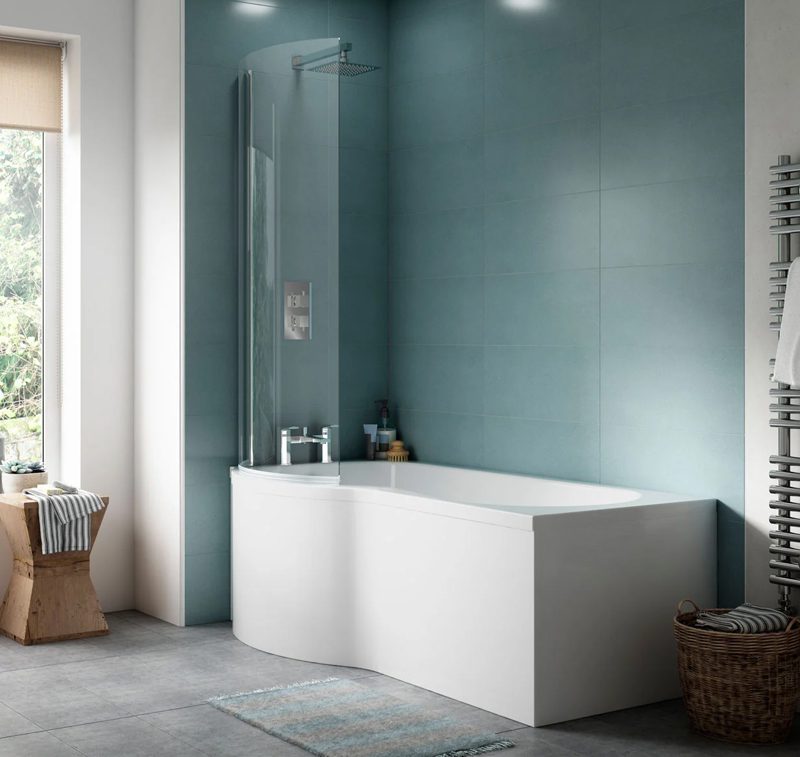
An L-shaped bath features a squared off wider section at one end, creating a distinct L profile when viewed from above. A P-shaped bath, by contrast, has a curved wider section, creating a softer, more rounded appearance. Both designs typically come in standard lengths of 1500mm, 1600mm, or 1700mm, making them suitable for most bathroom layouts.
The Space Saving Solution
The primary advantage of both designs is their ability to maximise limited bathroom space. In properties where installing a separate shower enclosure simply isn’t feasible, these baths provide a practical solution without compromising on functionality.
The wider section at one end creates a more comfortable showering area compared to standing in a standard straight bath. You have more room to move, the shower spray is better contained, and the overall experience feels less cramped. This makes them particularly popular in family bathrooms where different household members have different bathing preferences.
Design and Aesthetics
The choice between L-shaped and P-shaped often comes down to personal taste and the overall style of your bathroom. The L-shaped bath, with its geometric lines and sharp corners, suits contemporary and modern bathroom designs. It creates a clean, architectural look that works well with minimalist fixtures and fittings.
The P-shaped bath, with its curved profile, offers a softer, more traditional appearance. The rounded edge can feel more luxurious and is often perceived as more elegant. This design works beautifully in both modern and traditional settings, offering versatility in styling.
Consider the other elements in your bathroom design. If you have angular sanitaryware and geometric tiles, an L-shaped bath might create better visual harmony. If your bathroom features curved elements or you prefer a gentler aesthetic, the P-shaped option could be more suitable.
Comfort Considerations
When it comes to actually using the bath, there are subtle differences worth considering. The P-shaped bath, with its curved design, can be more comfortable for bathing. The rounded edge follows the body’s natural contours more closely, potentially offering a more relaxing soak.
The L-shaped bath has a defined corner where the bath widens. For some people, this corner can feel slightly intrusive when bathing, particularly if you’re of a certain height or prefer a particular position in the bath. However, many users find this makes no practical difference to their comfort.
If you’re primarily a shower person and only occasionally take baths, this distinction matters less. Both designs provide equally good showering space, so you can choose based on aesthetics alone.
Installation and Practical Matters
Both L-shaped and P-shaped baths are available in left-hand and right-hand configurations, allowing you to position them against any wall depending on your bathroom layout and plumbing locations. This flexibility makes them adaptable to various room configurations.
When working with professional bathroom fitters, they can advise on which configuration works best for your specific space, taking into account door positions, window locations, and existing plumbing.
One practical consideration is the shower screen. L-shaped baths typically use straight shower screens, which are widely available and relatively straightforward to replace if needed in the future. P-shaped baths require curved screens that follow the bath’s profile. Whilst these look elegant, they can be more challenging to source as replacements, particularly if you need to match a specific curve radius years down the line.
Storage and Accessibility
The wider showering section of both designs provides practical benefits beyond just standing room. There’s more space for shower caddies, wall-mounted dispensers, and other bathroom accessories. This additional room makes the showering experience more comfortable and functional.
For families with young children, the extra space is valuable for bath time. There’s more room to manoeuvre when bathing little ones, and as children grow and become more independent, they have adequate space to shower safely.
Cost Implications
Generally, L-shaped and P-shaped baths are similarly priced, with cost variations depending more on the quality of materials, brand, and finish rather than the specific shape. Both are typically more affordable than installing a separate bath and shower enclosure, making them cost-effective solutions for bathroom renovations.
The installation costs are also comparable. Both designs require similar plumbing work and installation time. The main cost difference might come from the shower screen, with curved screens for P-shaped baths sometimes commanding a slight premium over straight screens.
Maintenance and Cleaning
Both designs are equally straightforward to maintain. Modern acrylic baths are easy to clean and resistant to staining. The shower screens, whether straight or curved, require regular cleaning to prevent limescale buildup, but this is true of any shower enclosure.
The corner where the bath widens does create an additional edge to clean, but this is a minor consideration. Regular wiping down after use and periodic deeper cleaning keeps both designs looking pristine.
Making Your Decision
Choosing between L-shaped and P-shaped shower baths ultimately depends on several factors. Consider your bathroom’s existing style and whether geometric or curved lines would complement it better. Think about how you primarily use your bathroom. If you’re a dedicated bath lover, the P-shaped design might offer slightly more comfort. If showering is your priority, either option works equally well.
Practical considerations matter too. If you value the ability to easily replace components in the future, the L-shaped bath’s straight screen might be advantageous. If aesthetics are paramount and you love the elegant curve of the P-shaped design, that might be the deciding factor.
Visit a bathroom showroom where you can see both designs in person. Photographs don’t always convey the true appearance and scale of these baths. Seeing them in three dimensions, and ideally stepping into display models, gives you a much better sense of which feels right for your space.
The Versatile Solution
Whether you choose an L-shaped or P-shaped shower bath, you’re selecting a versatile solution that maximises your bathroom’s functionality. Both designs have proven popular for good reason: they work brilliantly in compact spaces, accommodate different bathing preferences, and can be styled to suit any bathroom.
There’s no universally correct choice. The right option is the one that fits your space, suits your style, and meets your household’s needs. Take your time, consider all the factors, and choose the design that you’ll be happy with for years to come.
Your bathroom should work for your lifestyle, and a well-chosen shower bath, whether L-shaped or P-shaped, ensures you don’t have to compromise between the luxury of a bath and the convenience of a shower.